
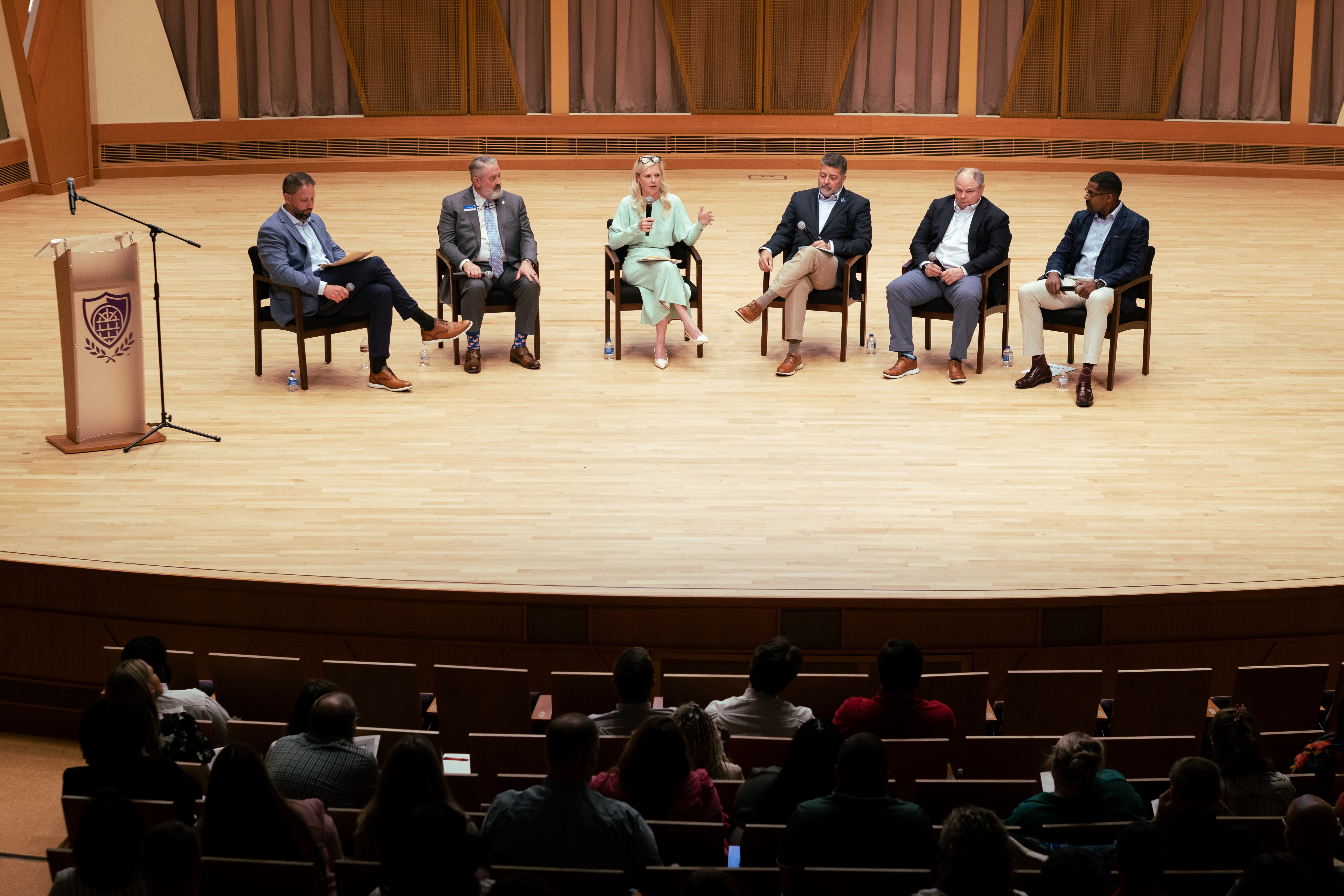
With electric demand rising at unprecedented rates, Arkansas utility leaders say the state’s energy infrastructure is at a critical turning point.
During the Powering Arkansas panel at FAB&T Outlook Conway, executives from regional utilities and grid operators discussed the mounting pressure to expand capacity, modernize the grid, and respond to industrial growth that’s moving faster than traditional planning timelines allow.
The conversation, moderated by Nabholz Corporation CEO Jake Nabholz, brought together executives from Conway Corp, Entergy Arkansas, Arkansas Electric Cooperative Corporation, Southwest Power Pool, and Midcontinent Independent System Operator to discuss how the grid is adapting to unprecedented economic growth and evolving energy needs.
Surging Demand, Limited Time

Laura Landreaux, president and CEO of Entergy Arkansas, warned that the state’s electrical demand could triple by 2030 if all the anticipated industrial growth materializes, driven largely by hyperscale data centers and advanced manufacturing.
“It took us 113 years to reach 4.8 gigawatts of peak demand,” Landreaux said. “We could triple that in less than a decade. And we have to be ready.”
That growth isn’t theoretical. Panelists said they’re already fielding requests from businesses with massive energy needs, many of which require service immediately upon opening. That compressed timeline challenges utilities and grid operators that traditionally plan projects over decades.
“We’re not ramping from zero to a thousand megawatts gradually anymore,” said Todd Hillman, chief customer officer at MISO. “It’s happening at once, and we have to be ready.”
Behind the Switch: What It Takes
Each panelist brought a different perspective on the challenges ahead.

Bret Carroll, CEO of Conway Corp, emphasized the advantage of local ownership and a supportive city government, which allow Conway to respond more nimbly than larger utilities. Still, supply chain pressures and rising equipment costs are forcing tough decisions.
“We’re a smaller utility,” Carroll said. “We don’t have the same purchasing power, so inflation and grid upgrade costs hit us harder. But we’re working to stay ahead of the curve.”
Buddy Hasten, CEO of Arkansas Electric Cooperative Corporation, added that the state’s 17 co-ops are navigating diverse local conditions while balancing affordability and equity. Some areas face population decline, while others are seeing large commercial loads seeking access.
“In a co-op model, everyone shares the cost,” Hasten said. “So when one small co-op lands a massive user, we have to ask: does that benefit everyone? And how do we keep it fair?”

Antoine Lucas, chief operating officer at Southwest Power Pool, underscored that building new generation — especially base-load power like gas or nuclear — takes time, and connecting it to the grid can take even longer.
“New transmission lines can take up to 10 years to permit and construct,” Lucas said. “Meanwhile, these loads are arriving in two to three years. We have to find a way to close that gap.”
Reliability, Education, and the Path Forward
Panelists agreed that the grid’s reliability is now a shared national concern, and that education must play a bigger role.
“There’s a misunderstanding that a megawatt of solar equals a megawatt of nuclear,” Hillman said. “But that’s not true when the sun isn’t shining. We need to educate policymakers and the public about the complexity of today’s grid.”
Carroll added that while renewable energy has an important role, utilities must continue to invest in dependable baseload generation if they want to meet future demand without compromising reliability.

Hasten called for a broader, more pragmatic national energy policy that accounts for diverse fuel sources and balances environmental goals with reliability.
“If we shut down every fossil plant tomorrow and lose reliability, what did we gain?” he said. “We need to stop thinking of carbon as the only variable. This is a multi-variable equation.”
Lucas echoed the need for policy flexibility and innovation.
“We’re working to integrate western states into the grid system,” he said. “But that requires cooperation, regulation reform, and long-term thinking.”
Arkansas as a National Model
Despite the challenges, panelists expressed optimism about Arkansas’s position. Landreaux praised recent legislative efforts that gave Entergy and other providers more tools to respond to growth and develop new generation.
“This last legislative session gave us what we needed to stay competitive with other states,” she said. “Now we’re working to deliver on that opportunity.”
Panelists also credited Arkansas regulators and economic development leaders with fostering a collaborative environment.

“Arkansas is an easier place to do business compared to many states,” said Hasten. “That helps us attract investment and maintain grid reliability.”
The Bottom Line
The future of Arkansas’s economy may depend on how well it meets the coming wave of electrical demand. Data centers, industrial facilities, and electric vehicle infrastructure will all require stable, affordable power and utilities are racing to meet that need.
“If we get it right, this could be a transformative decade for the state,” Landreaux said.
The panel closed with a call to action: support long-term energy planning, advocate for sensible policy, and recognize the critical role electricity plays in economic development.
“We flip a switch and expect the lights to come on,” moderator Jake Nabholz said. “But there’s a vast network of people and systems making that happen and their job is getting harder every day.”

FAB&T Outlook Conway was presented by Landmark CPAs and Smith Ford. The panel was sponsored by Entergy, Kutak Rock, and Nabholz Corporation.


Leave a Reply