
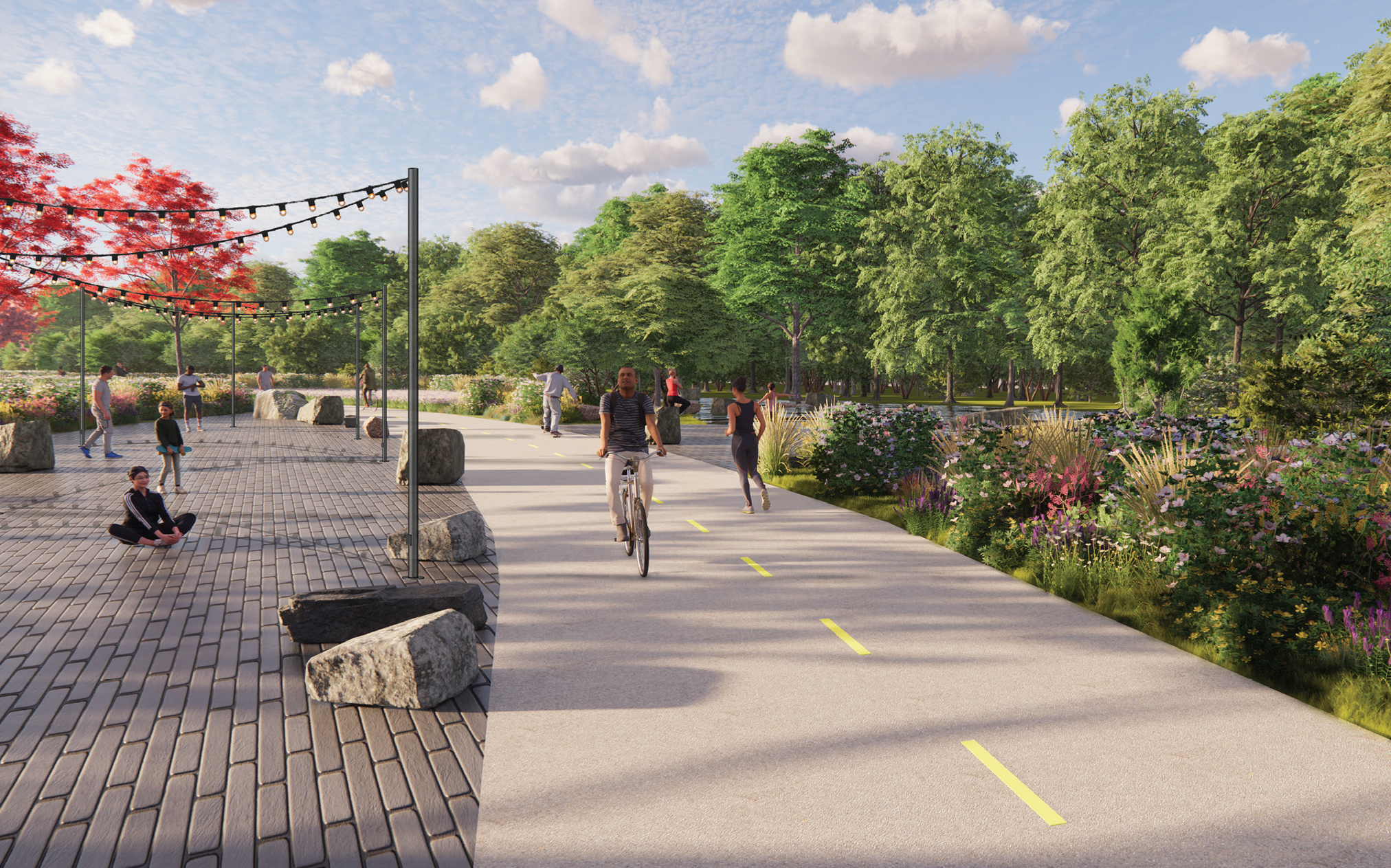
As Conway competes for talent, investment, and new employers, quality-of-place infrastructure has emerged as a decisive economic driver. Few projects illustrate that strategy more clearly than Connect Conway, a planned greenway expected to expand mobility, improve access across the city, and help shape the next phase of local development.
With design and engineering now underway, the project is shifting from long-range vision toward implementation, a transition economic leaders view as increasingly important in a labor market where communities compete as much for people as they do for projects.
Brad Lacy, president and CEO of the Conway Area Chamber of Commerce, said modern economic development begins with creating a place where people want to live. “Quality of place is the foundation of successful economic development today,” Lacy said. “Jobs follow people, and people choose to live in places that are vibrant and attractive.”
That dynamic has forced communities to think beyond traditional recruitment tools. Strong industrial sites alone are no longer enough, he said. “We can have incredible industrial sites, but if we can’t attract the people to work for those targeted companies, the site doesn’t matter,” Lacy said. Investments in trails, pedestrian infrastructure, and connected amenities have therefore become part of a broader talent strategy, one Conway has been building toward for years. “We have to win the talent war, and investing in things like trails is a big part of that strategy,” Lacy said.
Once complete, Connect Conway will link parks, schools, universities, retail centers, employment hubs, and neighborhoods, creating an alternative transportation corridor while improving how residents move between daily destinations.
City Engineer Kurt Jones said visible progress will likely begin toward the end of 2026, although construction sequencing is still being finalized. While trail systems are often associated with recreation, Jones emphasized their practical function. “It will provide safe opportunities for biking and walking to popular destinations by providing a safe and accessible transportation alternative,” he said.
The project will significantly expand Conway’s existing trail network while strengthening connectivity between east and west Conway, an infrastructure gap long recognized by planners. “Most of Conway’s existing bike and pedestrian infrastructure is in the city’s western portion,” Jones said. “Connect Conway will create a crucial link between the eastern parts of Conway and west Conway, providing more equitable access to services and opportunities.”
“This project represents a major milestone for Conway, not just in terms of infrastructure, but in how we connect our residents to the places they live, work, learn, and play,” said Mayor Bart Castleberry. “Thanks to the hard work of our city team and the support of our community partners, this investment will build out a trail system that improves safety, expands transportation options, and fosters more equitable access across Conway. We’re excited to see Connect Conway bring our city closer together.”
Improved connectivity frequently signals opportunity for private investment, and Lacy expects the corridor to attract additional housing, office, and retail development over time while supporting rising property values. “I think we will see additional housing, office, and retail develop along the corridor,” he said. “It’s an amenity that will raise property values and give people a different way to access shopping areas, employment centers, and neighborhoods.”
Projects that improve walkability and multimodal access are often associated with higher-quality development, particularly as relocating workers place greater value on convenience and accessibility. He pointed to Northwest Arkansas as a nearby example of how thoughtfully designed trails can influence growth patterns but noted that Conway enters the effort with a structural advantage: more than two decades of commitment to a complete streets approach. “For two decades, we have built streets that have included pedestrian and cycling infrastructure as well as roads for cars,” Lacy said. “This is important because it allows the trails to be part of a larger network of pedestrian and cycling infrastructure which makes even more of the city accessible. When Connect Conway is finished, we will have something unique.”
The system is also expected to expand transportation access for residents without reliable vehicles, a factor increasingly tied to workforce participation. “This grant will enable us to take a huge step to provide a viable alternative for the people of Conway to vehicular transportation through interconnectivity between parks, schools, neighborhoods, and commercial centers,” Jones said. “We’ve taken small steps in the past. This is a giant leap.”
For companies evaluating where to expand or relocate, projects of this scale often reflect whether a community is planning for long-term competitiveness. “We lead with quality of place when we recruit,” Lacy said. “Companies understand the importance. Connect Conway is the latest example of what this community values and expects for our future. That resonates with employers.”

Leave a Reply