
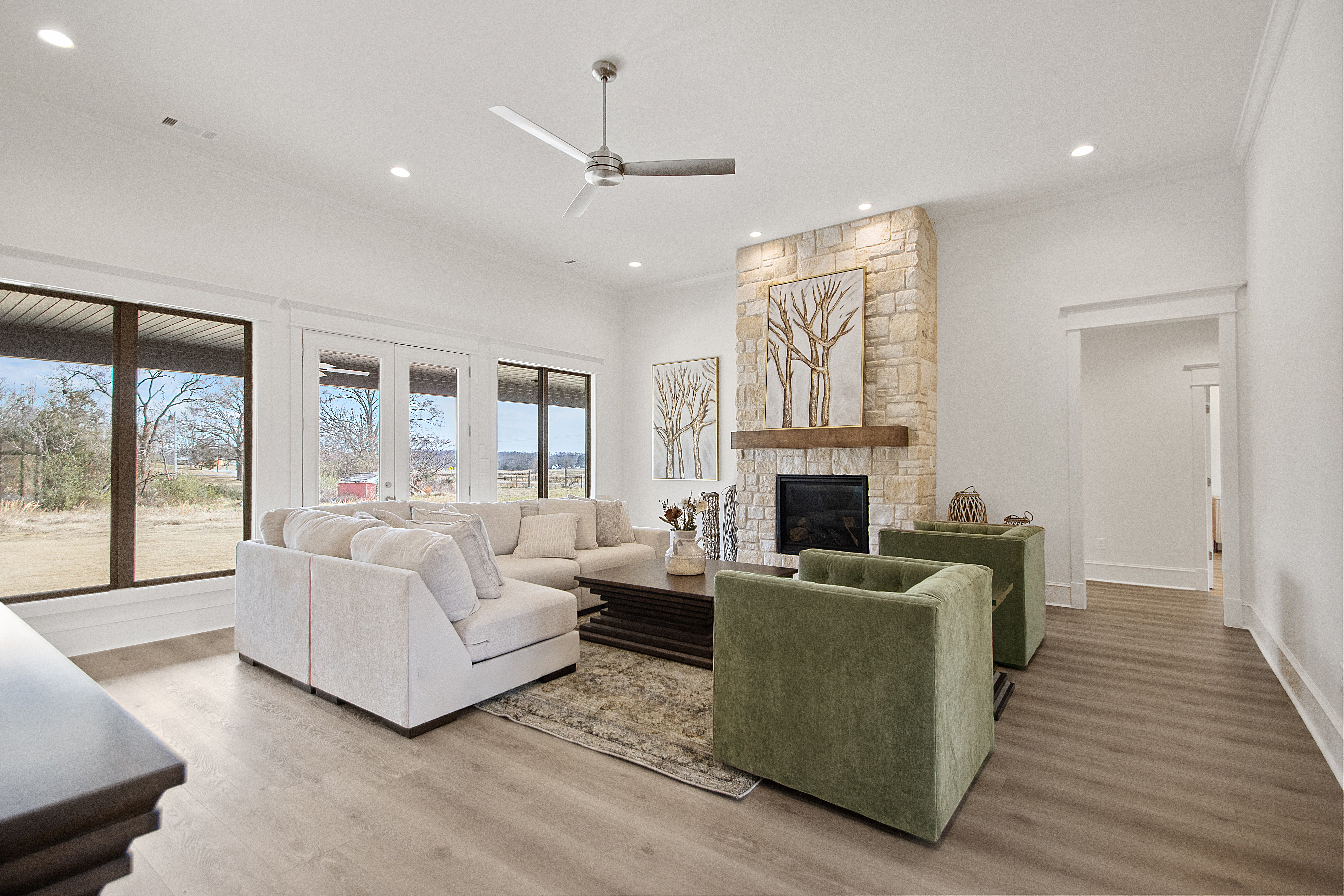
The Conway home of 2026 looks different than it did five years ago, and builders and realtors say the shift goes deeper than paint colors. The way people think about space, function, and what a home is supposed to do for them has changed, driven by remote work, changing family dynamics, and a market that has finally settled back into something resembling normal.
Out With the Stark, In With the Warm
The most visible shift in Conway homes right now may be on the walls. The black-and-white palette that dominated new construction and renovation projects for much of the past decade is fading, according to Kevin Watson, owner of Watson Homes, and licensed real estate agent.
“Warmer tones, traditional trim,” Watson said. “The black and white is kind of fading. Greens and off-whites are the trend. Simple is a big word right now.”
Quartz countertops have largely overtaken granite as the preferred surface in kitchens and bathrooms, Watson said, with clients drawn to the cleaner, more uniform look. Crown molding, detailed window trim, and arched doorways are also making a comeback after years of being overshadowed by the minimalist aesthetic.
Jonathan Watson, president of Watson Homes, also a licensed real estate agent, noted that softer, more rounded design elements are replacing the sharp, blocky lines that defined the modern look.
“More traditional lighting and light fixtures,” he said. “More round, softer edges.”
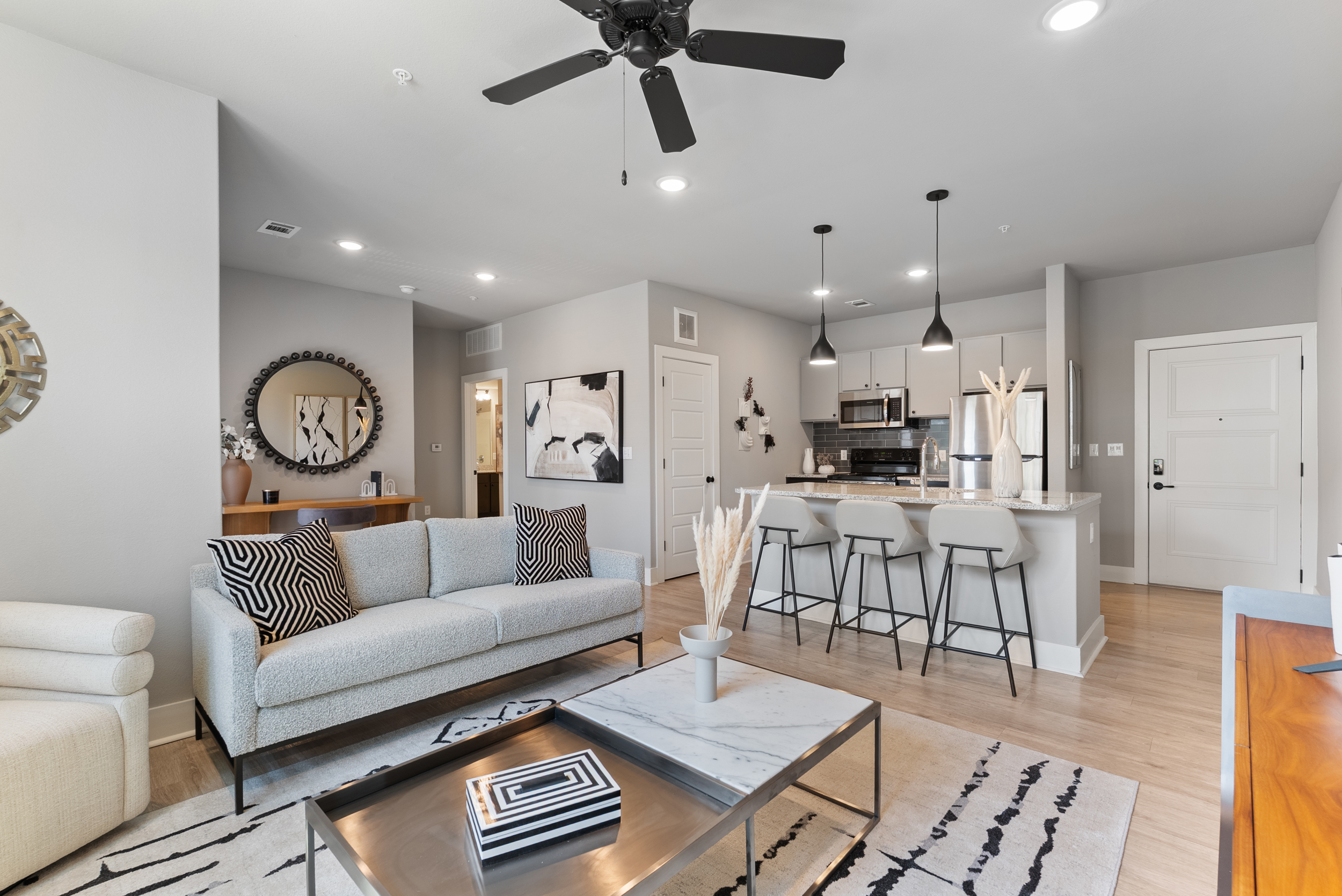
Karen Ferguson, executive broker at the Karen Ferguson Team at LPT Realty, said the shift is showing up in buyer expectations for existing homes as well. Buyers transitioning from apartment living have come to expect stainless steel appliances and upgraded finishes as a baseline.
“They’re just not wanting the standard anymore,” she said.
The Kitchen Still Sells the House
If there is one room that closes deals, every voice in the market points to the same one.
“Kitchens and primary bedrooms and bathrooms will sell a home oftentimes,” said Lori Quinn, a realtor with Coldwell Banker RPM Group. “It’s the technology, the upgraded appliances that really make those kitchens next level.”
Walk-in pantries have moved from nice-to-have to near-essential, Quinn said, driven in part by the sheer volume of appliances and gadgets buyers bring into their homes. Gas cooktops remain dominant, with Watson Homes reporting roughly 90 percent of clients requesting gas over electric.
Jamille Rogers, broker at Century 21 Sandstone Real Estate Group, said kitchen preferences come up in nearly every initial client conversation.
“When I’m on the phone with people prior to going to look, they say, I want an open kitchen, or my kitchen has to have an island, or my stove has to be gas,” Rogers said. “That is always like in the top three of discussion.”
Space to Live, Work, and Everything Else
The three-bedroom, two-bath home that once defined the standard buy has given way to something more flexible. Remote work, multigenerational living, and changing family dynamics have made a fourth room, whether a true bedroom or a so-called flex space, close to essential for a wide range of buyers.
“So many people work from home, so almost having that fourth room or that flex space is really, really important to most people,” Quinn said.
Ferguson noted the demand cuts across age groups and family situations. Buyers are using the extra space for home offices, homeschool rooms, living quarters for aging parents, or simply a room for adult children who have not yet moved out.
Formal dining rooms, meanwhile, have largely run their course. Jonathan Watson said clients have stopped requesting dedicated dining spaces, favoring instead a casual breakfast area off the kitchen, with what would have been the formal dining room converted into flex space or a home office.
Open Concept, With Caveats
The open floor plan remains the dominant preference, but builders are beginning to hear something different. Clients are asking for some definition between spaces, even if they are not ready to return to fully closed-off rooms.
“I think people are not as obsessed with it as they were,” said Luke Porter, a Conway custom home builder. “People have found that one big room, when you have kids, is also very loud.”
Kevin Watson estimated roughly half of his clients still want fully open layouts, while the other half are asking for some visual or architectural definition between spaces. Arched case openings and partial walls are among the most common solutions.
Rogers said the open, light-filled home remains a consistent ask among the buyers she works with.
“Open is still the thing,” Rogers said. “Open, airy, light colors. It’s calm, it’s positive, and it helps reduce stress. When you’re working from home, you need that space to be serene.”
Outside Is Part of the House Now

Outdoor living has moved well beyond the basic covered patio. Screened porches, outdoor kitchens, fireplaces, and dedicated entertaining areas have become standard expectations in a significant portion of new construction.
“People really do love a nicely done outdoor space,” Porter said. “Back in the day, you’d see a lot of older houses with no covered patio. Now it’s not just covered patios. It’s a lot of detail within that.”
Rogers said Conway’s trail system and park access give the market a natural advantage in meeting buyer demand for outdoor connectivity. Proximity to those amenities has become a genuine selling point, particularly for buyers who want outdoor space without the burden of a large yard.
Quinn noted that many buyers, particularly those in larger homes, are increasingly indifferent to yard size.
“A lot of buyers are okay with smaller lot sizes,” she said. “They don’t want to spend their weekends mowing and maintaining a yard.”
A Market With More Demand Than Supply Can Answer
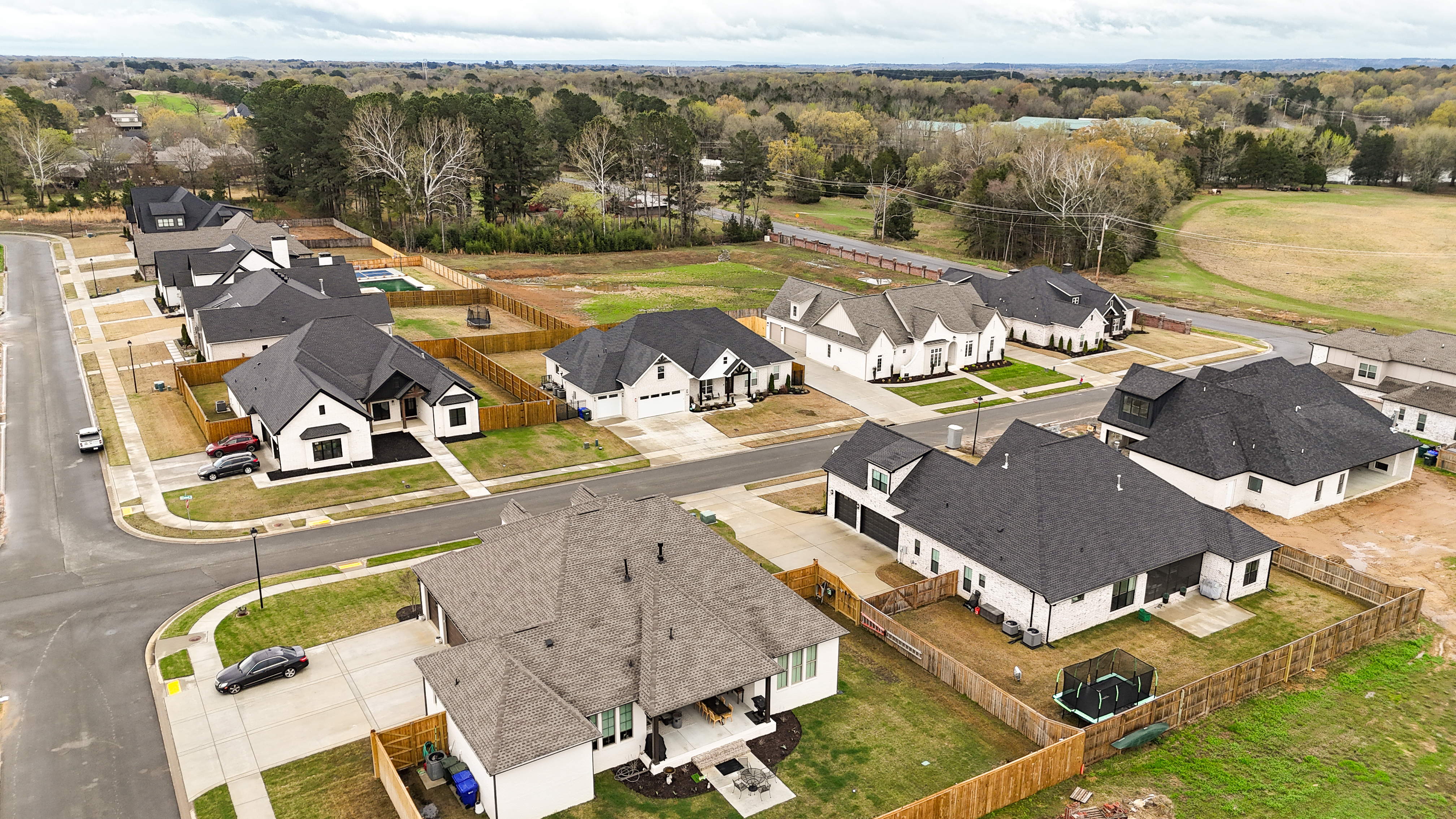
Behind the design preferences and wish lists is a more structural challenge: Conway does not have enough homes to meet current demand, and the pipeline to address that is constrained.
A housing study commissioned by the Conway Area Chamber of Commerce projects a need for 1,395 new households over the next five years, with the largest demand concentrated in the $550,000 to $750,000 range. The findings track closely with what builders and realtors are hearing on the ground.
Quinn said the timing challenge compounds the problem. Even when demand picks up, the market cannot respond quickly.
“When the market picks up, it can take six to nine months to build a house,” Quinn said.
Kevin Watson said the inventory problem starts with land. Developable lots are limited, infrastructure costs in some parts of the city make new development economically difficult, and builders are reluctant to get ahead of demand after watching what over-speculation did to other markets.
“Conway is not over built. It’s under built,” Watson said. “We did 120 building permits last year. If we went below 250 ten years ago, we would have been panicking. It used to be as high as 600 building permits.”
The cost of building is adding pressure from another direction. Watson said construction costs have risen significantly and are not expected to come back down. Porter said he is watching material costs closely, and that ongoing instability in the Middle East could push prices higher across a range of building supplies, given how much of the supply chain is tied to global energy costs.
“The costs are fixing to go up across a lot of things,” Porter said.
He added that when a client recently decided to pause a planned build and wait a few months to reassess, he understood the reasoning.
“I said, I don’t blame you at all,” Porter said. “Honestly, this is what I would do.”
Jonathan Watson said addressing the broader inventory problem will require builders, developers, realtors, and city officials to work in closer coordination than they have in the past.
“Having a collective mindset as builders and developers in Conway to help grow that is really important,” he said.

Leave a Reply